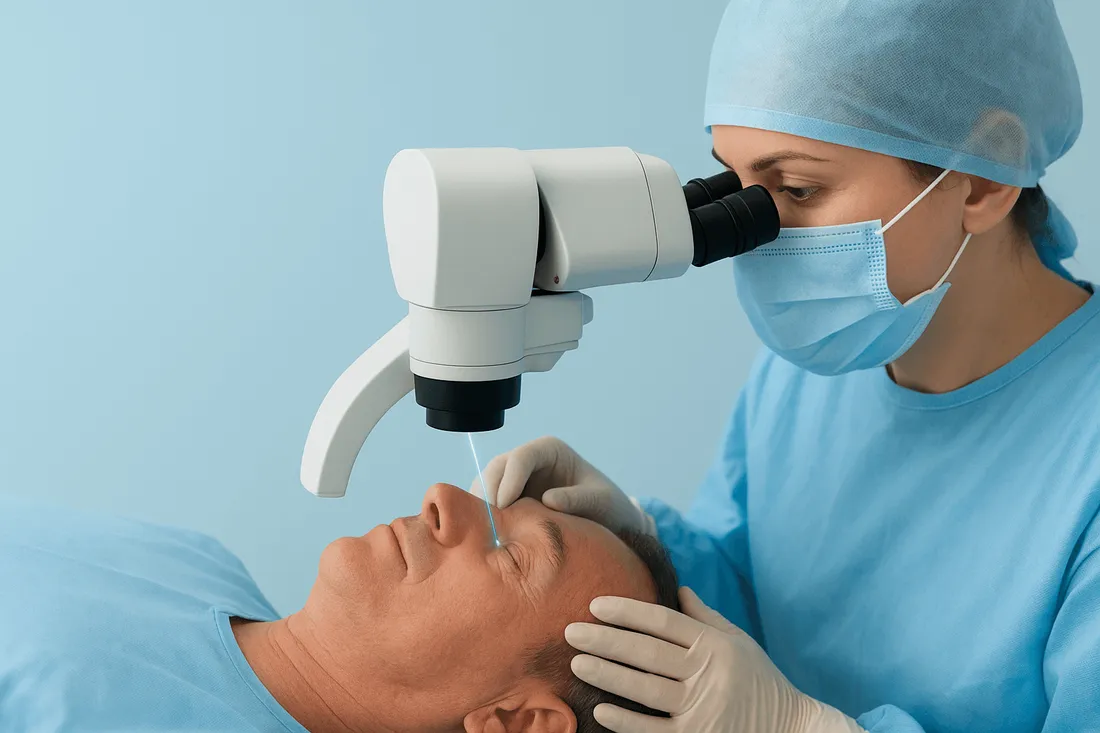

Is Laser Refractive Surgery for everyone?
- Higher degrees of myopia (>1,000?/>800?/>600?)
- Thin corneas (<500 um)
- Large pupils
- Dry eyes
- Keratoconus or suspicious looking corneas
One of these conditions occur in 40% of patients in my practice!!!
Option for them is lens-based solution, Phakic Intra-Ocular Lens (PIOL) or Permanent Contact Lens (PCL)
Lens based solution for Refractive Error Correction
- Refractive Lens Exchange (RLE)- Popular method a decade back esp for high refractive error
- Implantable Phakic Intraocular Lenses: very popular method world-wide
- Here, artificial lens implanted in Anterior or Posterior Chamber in the presence of Natural Crystalline lens to correct Refractive error
Phakic Intra-ocular Lens (PIOL)
Phakic Intra-ocular lens (PIOL), also known as Phakic IOL, is a procedure where intra-ocular lens is permanently implanted inside the eyeball to get rid of glasses. That’s why it is also known as “Permanent Contact Lens (PCL)”.
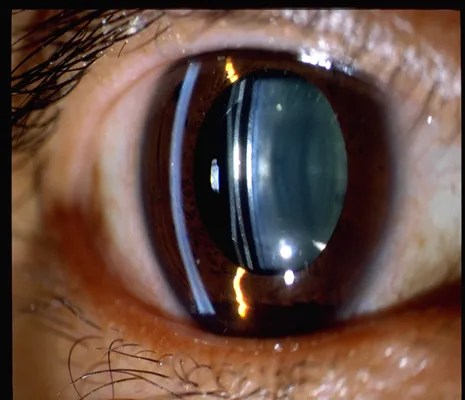
Management of high refractive errors especially with thin cornea is a refractive challenge.
Lasik for correcting high refractive errors has the drawbacks of lack of predictability, complications like-regression, corneal ectasia, and induction of high order aberrations- causing diminished quality vision especially in dim light.
It was first developed in the late 1980’s in Russia by Dr. S. Fyodorov and the first implant was placed in Europe in 1993. Fyodorov introduced the concept of a soft phakic lens in the space between the iris and the anterior surface of the crystalline lens. With the time, there is great evolution in Lens material and design.
There are many Phakic Intraocular Lenses are available, ACIOL, IRIS CLAW LENS, POSTERIOR CHAMBER PHAKIC LENS. Among them, Posterior Chamber Phakic Intraocular Lens is very commonly implanted lens, because of obvious advantages and long-term safety.
The Phakic Intra-ocular Lenses available today are made up of very inert material with long term safety.
Phakic Lens over Laser Refractive Surgery
- Wide range of correction (Safe and effective for very high degrees!)
- Better quality of vision (High-Definition vision) because, it retains corneal asphericity/original cornea, providing, better contrast sensitivity and night vision, even in very high Myopia
- Removable (reversibility of the surgery)
- No Dry eyes- Very fast recovery
- No question of cornea complication like Post- Lasik Ectasia- No tissue is permanently removed from the cornea
- Better predictability and stability and Regression of refractive error is very less, especially in High Myopia
- In case of ICL from Staar, Collamer contains a UV filter which protects against the negative effects of the sun on the crystalline lens and the retina
Advantages of Phakic IOL over Refractive Lens Exchange/RLE
- Preserves natural accommodative power of lens and natural vision of eye
- Better quality of vision (High-Definition vision) – better contrast sensitivity, better night vision
- Lower incidence of retinal detachment compared to RLE*
- Removable (reversibility of the surgery)
Arne JL, Lesueur LC. Phakic posterior chamber lenses for high myopia: functional and anatomical outcomes. J Cataract and Refract Surg 2000;26:369–74.
Types of Phakic IOL
They are mainly divided by position of the lens.
- Anterior Camber Intra-Ocular Lenses (ACIOL)
- Anterior Chamber Angle Supported Lenses
- Anterior Chamber Iris Claw Lens
- Posterior Chamber Intra-Ocular Lenses (PCIOL)
1. Visian ICL (Staar Surgicals)
2. EYECRYL (Biotech India)
3. EyePCL (IOC India)
4. From Aravind
With time, it has been observed and proved that Posterior Chamber Phakic Intra-ocular Lens is safer and more acceptable with very less side effects/complications compared to other lenses.
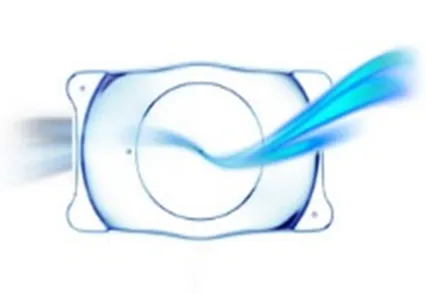
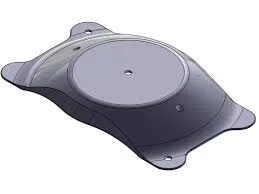
Posterior Chamber Phakic Intra-ocular Lenses
Visian Implantable Collamer Lens (ICL) from STAAR SURGICALS, Swiss/USA – very popularly implanted Lens
ICL – US FDA approval on December 22, 2005
Toric ICL – US FDA approval on September 13, 2018
Indications and pre-requisites for Phakic Intra-ocular Lens
- When residual bed after LASIK is likely to be less than 300μ, means insufficient corneal thickness for Laser Refractive Surgery
- Patient is with high or complex Refractive Error (Your doctor will explain you)
- When the initial corneal thickness is less than 470μ
- Age must be above 21 years
- Stable refraction since last 2 years (<0.5DS variation)
- Good anterior chamber depth (ACD) (Ideally ≥ 2.8 mm) with wide open angle
- No active ocular pathology (Cataract, Uveitis, Glaucoma, Retina & Macular diseases etc.- please discuss with your Doctor)
- Mesopic pupil <6.0mm
- Requires multiple tests/examinations before surgery to customize the lens for perfect fitting.
- As it is an intraocular surgery, I will not operate both eyes together, but one by one, though many Doctors prefer to do same day, same time, one by one. You can discuss with your doctor.
- Requires IOP check up every 6 months for first 3 years and then regularly every year.
Advantages of Phakic Intraocular Lens over LRS
PIOL is an intra-ocular procedure but still has advantages over LRS which is extra-ocular procedure
- In a case of very high &/or complicated Refractive Error, thin &/or irregular cornea – by PIOL it is possible to become glass free
- High definition vision is maintained even in dim light, especially when very high or complicated refractive error is corrected
- No Dry Eye
- Not common for power to come back in future especially high-power correction.
- No Cornea related complication like LRS induced Ectasia
- Reversible procedure
- Lens is not visible with naked eye/no shiny reflex in the eye
Side effects/Complications of Phakic Intra-ocular Lens
- Night time glare while looking at the light
- Surgery induced Cataract- With newer design lenses and detailed measurements, very rarely observed
- Surgery induced Glaucoma- With newer design lenses and detailed measurements, very rarely observed
- Steroid Induced Glaucoma- needs to stop Steroid and medications advised to control increased intra-ocular pressure. To keep check on it, post-op follows up IOP checkup is very important
- Anterior Chamber reaction
- Retina related complications because of degenerative changes in the retina- like Retina Detachment
- In Hypermetropia, Iridectomy will be done. Patient can have Iridectomy related complication
- Infection-Though not very common, it is a serious sight threatening complication.
- All dos and don’ts, explained after surgery- are basically to prevent infection in the eye after surgery
Procedure
- The Phakic IOL, which has power according to the patient’s measured glass, is loaded in specially designed Loader-Injector
- Small self-sealing corneal incision made
- The ICLTM phakic IOL is inserted in the anterior chamber of the eye.
- And positioned, behind the iris and in front of the natural lens.
- The incision required to perform this operation is usually self-sealing but it may require closure with very fine stitches (sutures) which will gradually dissolve over time or may require removal later in the office.
- After 1- or 2-hours Intraocular pressure is checked and then you will be discharged.
- A temporary shield may be placed over the eye or asked to wear Shades to protect it during the immediate postoperative period
- You will return to your ophthalmologist the next day for an examination.
- Your eye will be examined with a Slit lamp to make sure the lens is positioned correctly and that there are no complications.
- You will return for additional postoperative exams as instructed by your ophthalmologist.
- Although you may see some improvement in your vision as early as the first postoperative day, the visual effects of phakic implant surgery may take several weeks to stabilize.
- Patients are generally able to return to their normal activities within 2 or 3 days following phakic implant surgery.
- Please visit http://www.discovericl.com (staar.com) for more detail.
Limitations of Phakic Lens Implantation Surgery
- This procedure does not treat presbyopia, a condition common in patients age 40 or older in which the eye loses its ability to change power to allow focusing of both near and distant objects. Recently Presbyopic Phakic Lens is launched, but facing many challenges. You can discuss this option with your Doctor
- The results of this surgery cannot be guaranteed, and minor glasses may still be required for sharpest vision for distance, for night driving or other activities performed in low light, for reading or, for all these activities.
- BALANCE OF VISION- Do not compare eyes as both eyes vision will be different
- With increasing age, patients are likely to develop cataracts. If the cataract is significant enough to cause visual problems, the cataract removal Phakic Lens and implantation of an artificial intraocular lens is done.
How Refractive Surgery like PIOL improves life
- Cosmetic or Aesthetic reason
- No/Reduced dependency on Glasses or Contact lens
- It removes restriction on day-to-day activity which that person like to do
- Gives more freedom to their life style
- Psychological improvement

M.S. (Ophth), FLVPEI (Cornea & Anterior Segment). Medical Director, CSR Eye Hospital, Hyderabad, with 29+ years of experience in cataract, cornea and refractive surgery.
View full profile →