
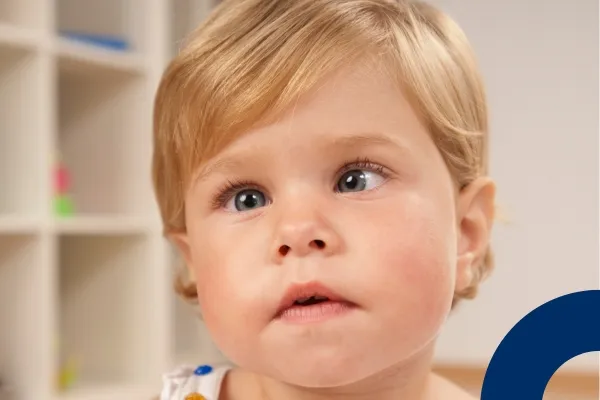
Definition
- Amblyopia is when vision in one or both eyes does not develop properly during childhood despite having normal eye. It is sometimes called lazy eye
- Amblyopia is a common problem in babies and young children especially with unnoticed Refractive error
- A child’s vision develops in the first few years of life. It is important to diagnose and treat amblyopia as early as possible. Otherwise, a child with amblyopia will not develop normal, healthy vision and will lose stereopsis/vision-depth perception.
What is the cause of Lazy eye/Amblyopia?
Here are some conditions that may cause amblyopia in a child.
- Strabismus:
Strabismus/Squint/Cross eye is when the eyes point in two different directions. One of eye which is misdirected will cause blurred vision and the child’s brain will start ignoring the image of the eye which is not focused straight. This will lead to decreased development of vision/visual acuity in that particular eye, known as Amblyopia.
- Refractive errors:
If child is having a refractive error (means being nearsighted, farsighted, or having astigmatism -distorted or blurry vision) and not wearing glasses especially in a developing stage, one (one eye Refractive Error) or both eye vision will not develop properly, known as Amblyopia.
- Cloudiness in the normally clear parts of the eye:
Some children are born with a congenital cataract or some other problem, which will cause obstruction in vision causing poor vision development in that eye known as Amblyopia. That is why Child after cataract surgery needs vigorous Amblyopia management.
Diagnosis
- Your child might not be aware of having worst/better vision in one eye than the other. And you may not realize it either unless your child has strabismus or another eye problem which parents cannot see, and visit eye hospital for some reason.
- Ophthalmologists diagnose Amblyopia by checking to see if vision differs between the two eyes.
- The Ophthalmologist will do a complete medical eye exam, looking for any other eye problems that could be affecting vision.
Poor vision in one eye does not always mean a child has Amblyopia. In some cases, wearing glasses to correct a refractive error in the eye can improve vision.
Amblyopia Treatment
- Correcting the Cause:
- Glass checkup and prescription
- If needed- Surgery- in case of Squint, Ptosis or Cataract etc.
- Forceful use of weaker eye:
- Patch therapy- Amblyopia is usually corrected by making the child use their weaker eye. This is often done by putting a patch over the child’s stronger eye. In some cases, eye drops can be used to blur vision in the stronger eye. Or the child may wear eyeglasses with a lens that blurs vision in that eye.
- Atropine penalization- Atropine Eye Drops in the stronger eye to blur near vision and force child to use weaker eye
- Vision Therapy/training (Orthoptic Exercises/Digital Therapy-Virtual games) is a perceptual learning software program, scientifically and clinically proven to enhance the neural visual processing in the primary visual cortex, resulting in long lasting vision improvement.
- The specific efficacy claims written in the FDA 510K certificate are: Improvement of VA, Contrast Sensitivity and Stereo Acuity.
Things to ponder
- It generally takes several weeks to several months to strengthen vision in the weaker eye. Once the child has better vision in that eye, they may need to wear an eye patch part-time for a few years. This is because there is a chance that eye can weaken again. Remember to keep all appointments with the child’s ophthalmologist who will carefully monitor your child’s vision.
- Explain the amblyopia treatment to the child’s teacher. Ask the teacher to compliment the child on being so good about wearing the patch. Children thrive on positive feedback from their teachers.
- Treating Amblyopia for Better Lifelong Vision
- When a child has amblyopia, it is important to make vision stronger in the weak eye. Even if eye problems causing amblyopia are corrected with glasses or surgery, the amblyopia itself must be treated. If not, the child may have lifelong vision problems
More info on Patch Therapy
- How to Choose and Use an Eye Patch
- An eye patch should be comfortable, yet remain firmly in place
- It should also not allow the child to peek around its edges
- Variety of sizes and types of eye patches including decorated fun patches available online
- Do not use the black eye patches with elastic bands or ties (such as a pirate-type patches) as child can easily remove or peek around
- To wear the patch, simply attach it to the skin around your child’s eye
- If your child wears glasses, there are patches designed to attach to the lens. These may be good for children who are used to wearing a patch, but they are not as good for a child new to treatment. This is because the patch can slip or the child may learn to peek around it. If your child wears glasses and is not used to patching, it is best to attach the patch directly around the stronger eye underneath the glasses
- How to increase cooperation from child for patching
Strengthening the weaker eye is the only way to develop healthy, normal vision
- Children do not like to have their stronger eye patched or blurred. However, you need to help your child do what is best for them. Otherwise, treatment will not work
- Try distracting the child or having them do something that keeps their attention or reward the child with a treat for wearing the patch
- It can take a while for your child to get used to wearing a patch. Over time, this should get easier for them and you
- Teach Your Child About the Eye Patch- Pre-school or school-age children might not want to wear an eye patch or use blurring eye drops. For their co-operation parents should explain how important these treatments for him/her to be able to see well. And reassure them that lots of children wear eye patches for the same reason
- Explain child’s friends, classmate, and class teacher, about the of importance of patching, so that the child gets encouraged not bullied.
- Ask the teacher to compliment the child on being so good about wearing the patch. Children thrive on positive feedback from their teachers
- Consider having a very young child practice putting an eye patch on a doll or let the child decorate his or her patch with crayons or markers.
- Crude methods- If your child still takes off the patch, as a last resort, you might cover his or her hands with gloves, mittens, or socks
- Things to consider with patching treatment:
- Be sure to keep the child’s appointments with the ophthalmologist so that vision in both eyes can be closely monitored
- In very rare instances it is possible to overuse the patch or blurring eye drops. This can affect vision in the stronger eye
- The skin near your child’s eye patch can get irritated. To help, try a different size or type of patch, and angle the patch differently each day
- Your child may initially be clumsy when wearing a patch. Try to keep an eye on your child when they are climbing stairs or being active.
Surgery to Correct Causes of Amblyopia
- In some cases, the ophthalmologist will recommend surgery to correct certain eye problems causing amblyopia, for example cataract surgery for Congenital Cataract, Strabismus or Ptosis correction.
Treating Amblyopia for Better Lifelong Vision
- When a child has amblyopia, it is important to make vision stronger in the weak eye
- Even if eye problems causing amblyopia are corrected with glasses or surgery, the amblyopia itself must be treated. If not, the child may have lifelong vision problems
- Adults can also avail treatment for Amblyopia management. Today, Vision Therapy has shown improvement in quality of vision and in some cases 1–2-line improvements, in cases of Amblyopia treatment in adults.

M.S. (Ophth), FLVPEI (Cornea & Anterior Segment). Medical Director, CSR Eye Hospital, Hyderabad, with 29+ years of experience in cataract, cornea and refractive surgery.
View full profile →