
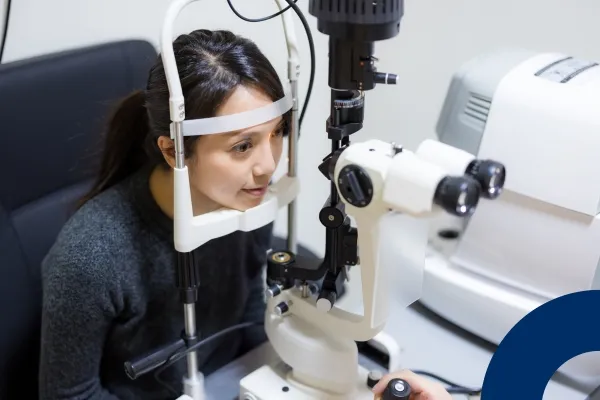
Comprehensive eye checkup for children
- All new born babies should be checked for “Red Reflex” by Pediatrician after birth. You must have observed this reflex in some of the photographs especially taken in dark.
- By Ophthalmologist at the age of 6 months for squint and vision, and in preschool, at 3 years of age for Visual Acuity. Then at 5 years of age.
- Most of schools do vision check up every year for students
- All premature child- should undergo Ophthalmic eye checkup within one month. Government is running this program “Tees Din Roshni Ke”, to eradicate loss of vision in premature babies by examining their eyes within 30 days after birth (For premature baby)
Comprehensive eye check for adults
- Before the age 40, every two years
- From the age 40 to age 54, every one to two years
- From the age 55 to 64, every year
- After age 65, every six to twelve months
- Anyone with high risk factors for Glaucoma, Diabetes, Hypertension, should be tested every year after age 35
Common problems in children
- Refractive Error
- Squint
- Amblyopia
- Allergy/Red eye
Common problems in adults
- Cataract
- Glaucoma
- Eye problems associated with systemic diseases like DM, HT, RH, Thyroid diseases etc.
Important observation by parents
Eye or vision problems can delay a baby’s development. It is important to detect these problems as early as possible, so that they can get the help they need, to learn and grow
- Watch for any signs of abnormal eye appearance and vision problems. They can include squint/Strabismus/Cross eye or significant delays in tracking moving objects. Bring them to your Pediatrician and Ophthalmologist’s attention
- Watching television very closely or not able to see blackboard in school
- Make sure to strictly restrict your infant/child eye screenings as recommended to find out any vision problems at early stage only
- In premature baby within first 30 days to rule out ROP
- Talk with your pediatrician to find out what age-appropriate activities you can do with your baby to help develop their vision
Children with Refractive Error (Glasses)
- Up to 3 years of age 0 to 1.75D Refractive error is normal.
- Astigmatism is also commonly observed in children. Between 0-2 years, astigmatism is generally not corrected unless it exceeds 3.25D. In 2-4 years, correction can be considered if it exceeds 2D. In those above 5 years, correction is recommended if the astigmatism exceeds 0.75D. Oblique cylinders should be corrected to avoid amblyopia.
- Among all, Myopia is the most common Refractive error observed in children, requiring correction with glasses
- Low myopia, less than -1.5d, is found in premature infants and can emmetropize later on
- By 5 years and older -0.5D is considered abnormal
- All children without spectacle and low myopia should be monitored 3-6 months intervals
- Children with spectacles, should be observed in 3 months after prescribing glasses to check adaptation
- Pre-school and early school-age children should be observed every 6 months to check progression of refractive error
- Older children with glasses should be monitored yearly for progression
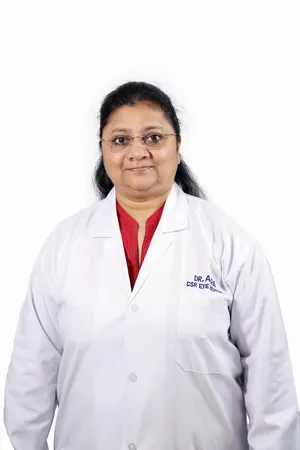
Written by
M.S. (Ophth), FLVPEI (Cornea & Anterior Segment). Medical Director, CSR Eye Hospital, Hyderabad, with 29+ years of experience in cataract, cornea and refractive surgery.
View full profile →